Half vs Open Face vs Full Face Motorcycle Helmets: Which Is Right for You?
Half, open face, modular or full face: every helmet style trades coverage against airflow, weight and convenience. None is right for everybody. This guide lays out what each one does well and where it falls short, so you can match the helmet to the way you ride.
Half helmets
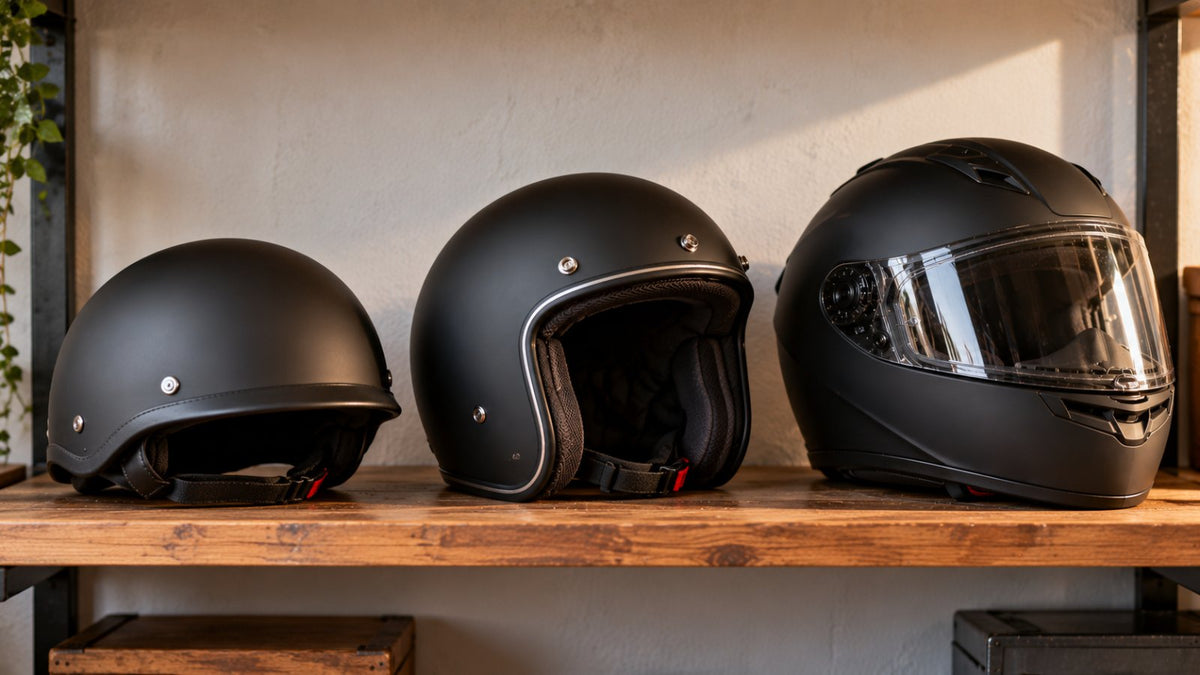
Half helmets cover the top of the head and leave the face and, usually, the ears open. They are the lightest and coolest option and the traditional choice for cruisers and choppers.
- Good for: short rides, hot weather, low-speed cruising, riders who dislike feeling enclosed.
- Trade-offs: the least coverage of any style, no face or chin protection, and full exposure to wind, rain, bugs and road grit.
- Pair with: goggles or riding glasses, and ear pads when it turns cold.
Open face (3/4) helmets
Open face helmets cover the top, back and sides of the head, including the ears, and leave the face open. Many take a flip-down visor or a full-length shield.
- Good for: city riding, scooters, cruisers and anyone who wants a wide field of view with more coverage than a half helmet.
- Trade-offs: no chin bar, so the lower face is unprotected; noisier than an enclosed helmet at highway speed.
Modular (flip-up) helmets
Modular helmets look like a full face but the chin bar and visor hinge upward. Ride with it closed; flip it up when you stop.
- Good for: touring, commuting, riders who wear glasses, and anyone who talks to people at fuel stops and toll booths.
- Trade-offs: the hinge mechanism adds some weight, and they tend to be a little noisier than a one-piece full face.
Full face helmets
Full face helmets are a single shell with a fixed chin bar. They give the most coverage and the best protection from weather and noise.
- Good for: highway miles, sport riding, cold or wet weather, and riders who want the most coverage.
- Trade-offs: warmest in summer traffic and the most enclosed feeling; you take it off to drink or talk.
Dirt bike and adventure helmets
Off-road helmets add a peak to block sun and roost and a large eye port sized for goggles. Adventure versions blend that shape with a road-style shield for mixed riding.
Side by side
- Most coverage: full face, then modular, open face, half.
- Most airflow: half, then open face, modular, full face.
- Lightest: half helmets, by a clear margin.
- Quietest: full face, with modular close behind.
- Most convenient at stops: modular and open face.
How to decide
- Where do you ride most? Mostly highway points to full face or modular. Mostly town and back roads leaves every option open.
- What is the weather like? Heat favors half and open face; cold and rain favor enclosed helmets.
- How long are your rides? Wind noise and fatigue build over hours, which is when a full face or modular earns its place.
- Do you want audio? Speakers and microphones work best in enclosed helmets. See our guide to choosing a Bluetooth motorcycle helmet.
Plenty of riders end up owning two: an enclosed helmet for long days and a half or open face for short, warm rides.
Whatever you pick, get the fit right
A helmet that does not fit cannot do its job. Measure your head and use the size chart on the product page; our helmet size guide shows how. Check the safety standard stated on the product page (the US road standard is DOT FMVSS No. 218), and remember that helmet laws vary by state. Replace any helmet that has been in an impact.
Browse all motorcycle helmets to compare styles.