Article: How to Choose a Bluetooth Motorcycle Helmet
How to Choose a Bluetooth Motorcycle Helmet
A Bluetooth motorcycle helmet puts music, phone calls and GPS directions inside your lid, with nothing to mount and no wires to route. The catch is that "Bluetooth helmet" covers several quite different products. This guide walks through the choices that matter so you buy the right one the first time.
1. Bluetooth headset or Bluetooth intercom?
This is the most common source of disappointment, so settle it first.
- Bluetooth headset (music and calls): pairs with your phone. You get music, calls and spoken GPS directions. It does not let you talk to other riders.
- Bluetooth intercom: does everything above and also connects helmet to helmet, so you can talk to a passenger or to a riding group. Product listings usually state how many riders can join, for example 2 or 2–8.
If you only ride solo, a headset is enough. If you ride two-up or in a group, even occasionally, choose an intercom model. Some helmets let you pick either version under a "Headset Type" option, so check which one is selected before you add to cart.
2. Pick the helmet style first
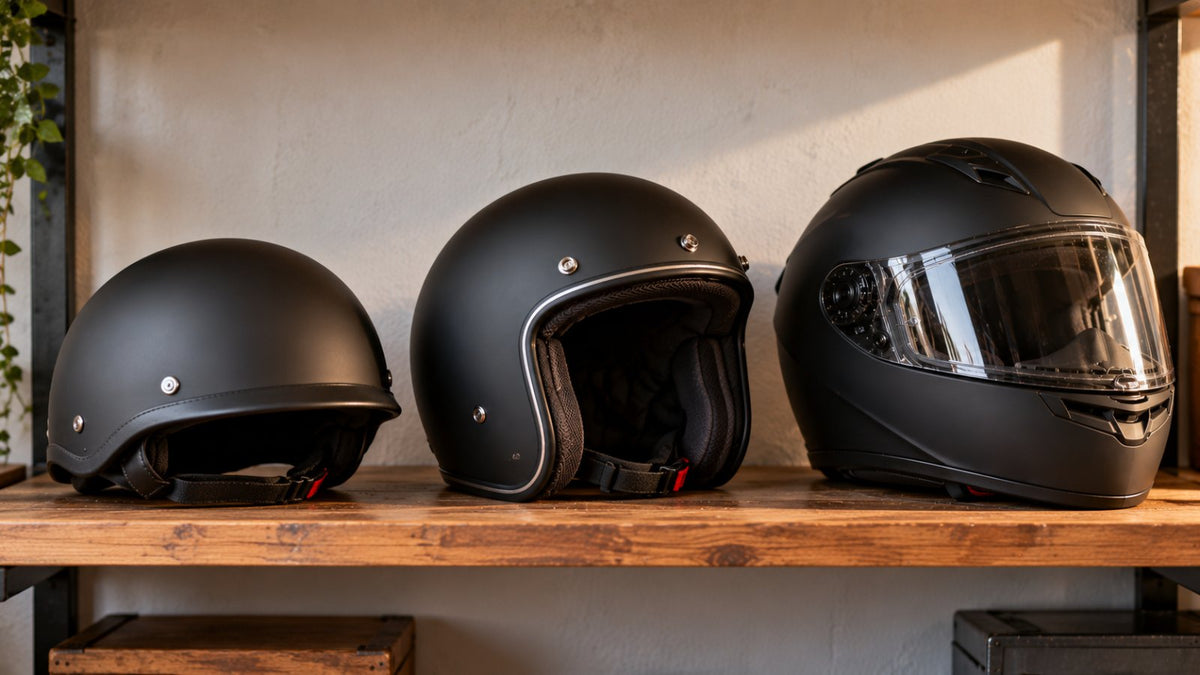
The electronics matter less than the helmet they sit in. Choose the shell style for the riding you do, then look for a Bluetooth version of it.
- Modular: full face coverage with a chin bar that flips up. The favorite for touring and commuting because you can talk, drink or get some air at a stop without taking the helmet off.
- Full face: one-piece shell, the most coverage and usually the quietest, which also helps you hear the speakers at highway speed.
- Open face: classic look and a wide field of view. Expect more wind noise around the microphone and speakers.
3. Battery life: talk time versus standby
Listings quote two numbers. Working or talk time is how long the unit runs while in use. Standby time is how long it lasts switched on but idle, and is always far larger. Compare talk time with your longest riding day, and remember that intercom use drains a battery faster than listening to music.
4. Sound and microphone
- Noise reduction: look for wind and engine noise reduction on the microphone if you take calls or use an intercom at speed.
- Speaker position: speakers need to line up with your ears. If the sound seems weak, the speaker is usually sitting too far forward or back in the ear pocket.
- Earplugs: many riders wear filtered earplugs and turn the volume up slightly. It protects your hearing and often makes speech clearer.
5. Controls you can use with gloves
You will be pressing buttons with a gloved hand while riding. Large, well-spaced buttons or a jog dial are easier to use than small flush ones. Voice assistant support (Siri or Google Assistant) lets you place calls or change music without touching anything.
6. Pairing with a phone and a GPS
If you run a separate GPS unit as well as your phone, look for dual device pairing so both can stay connected at once. Without it you will have to choose one.
7. Fit and safety still come first
A Bluetooth helmet is a helmet before it is a gadget. Measure your head, use the size chart on the product page and check the fit when it arrives. Our helmet size guide shows how to measure. Look for the safety standard stated on the product page; in the United States the road standard is DOT FMVSS No. 218. Helmet laws differ from state to state, so check the rules where you ride.
8. Built-in, or add a headset to the helmet you own?
If you already have a helmet you like, a separate Bluetooth headset or intercom can be fitted to it. Built-in systems are tidier and need no installation; add-on units can move with you to your next helmet.
Quick checklist
- Solo only, or do I need rider-to-rider intercom?
- Modular, full face or open face?
- Is the talk time longer than my longest ride?
- Can I work the buttons with gloves on?
- Do I need phone and GPS connected together?
- Have I measured my head and checked the size chart?
Ready to compare? Browse all Bluetooth motorcycle helmets, and keep a spare shield handy from visors and helmet accessories.