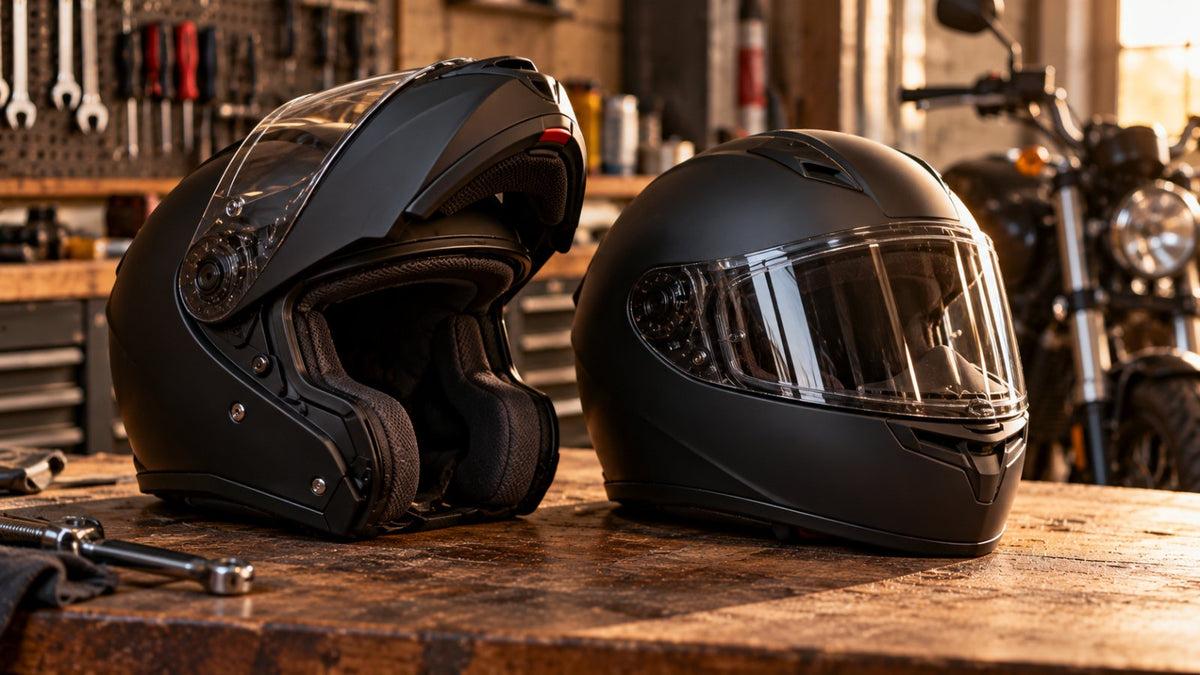
Article: How to Clean and Care for Your Motorcycle Helmet
How to Clean and Care for Your Motorcycle Helmet
A helmet that is looked after is more comfortable, smells better and lets you see properly. It also gives you a regular reason to inspect it. Here is a simple routine that works for any helmet style.
What you need
- Lukewarm water and mild soap or baby shampoo
- Two or three soft microfiber cloths
- A soft toothbrush or cotton buds for vents
Avoid solvents, glass cleaner, petrol and abrasive pads. They can damage the shell finish, the visor coating and the liner underneath.
1. Clean the shell
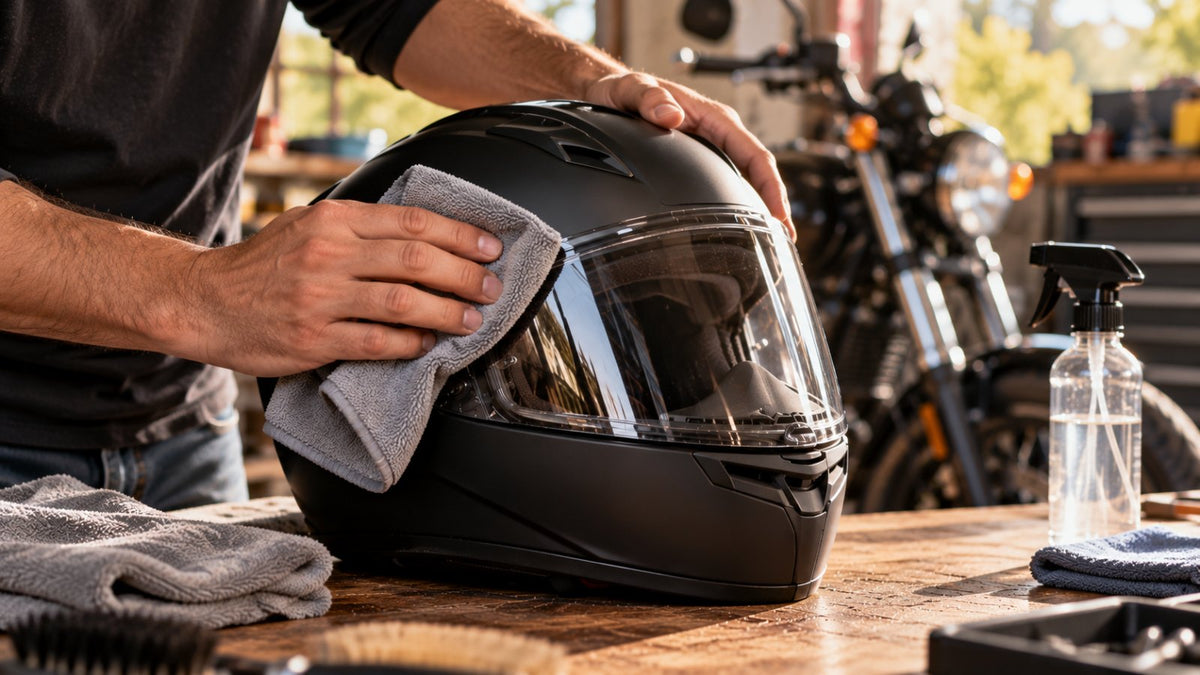
Lay a wet, warm microfiber cloth over dried-on bugs for a few minutes to soften them, then wipe gently. Wash the rest of the shell with soapy water and dry with a clean cloth. Clear vents with a soft brush.
2. Clean the visor
Rinse grit off before you wipe, so you do not drag it across the surface. Use soapy water and a microfiber cloth, inside and out, with light pressure. Be extra gentle on the inside if your visor has an anti-fog coating, and never use paper towels.
A visor that is scratched enough to scatter light at night should be replaced. Find the right one for your helmet in visors and helmet accessories.
3. Wash the liner
If the cheek pads and liner are removable, take them out and hand wash in lukewarm soapy water. Rinse well, press the water out without wringing, and let them air dry fully before refitting. If the liner is fixed, wipe it with a damp soapy cloth and leave the helmet to dry in moving air. A thin head cap liner worn under the helmet keeps sweat off the padding in the first place.
4. Dry and store
- Air dry at room temperature. No hairdryers, heaters or direct sun.
- Store somewhere cool and dry, away from fuel and cleaning chemicals.
- Do not hang the helmet on a mirror; it can dent the liner. Do not keep gloves inside it.
5. Inspect while you clean
- Shell: look for cracks or deep gouges.
- Liner: check the padding has not gone loose or crumbly.
- Strap and buckle: no fraying, and the fastener closes positively.
- Visor mechanism: moves smoothly and seals when shut.
When to replace a helmet
Replace any helmet that has been in a crash or taken a hard knock, even if it looks fine: the protective liner is designed to crush once. Many manufacturers also suggest replacing a helmet after about five years of use, as padding and materials wear with age. If the fit has gone loose, it is time.
Shopping for a replacement? Start with half vs open face vs full face helmets, check your size with our helmet size guide, then browse all motorcycle helmets.